Boot, Everyday Shoe, Low Heel: The Three Pairs That Get a British Commuter Through the Year
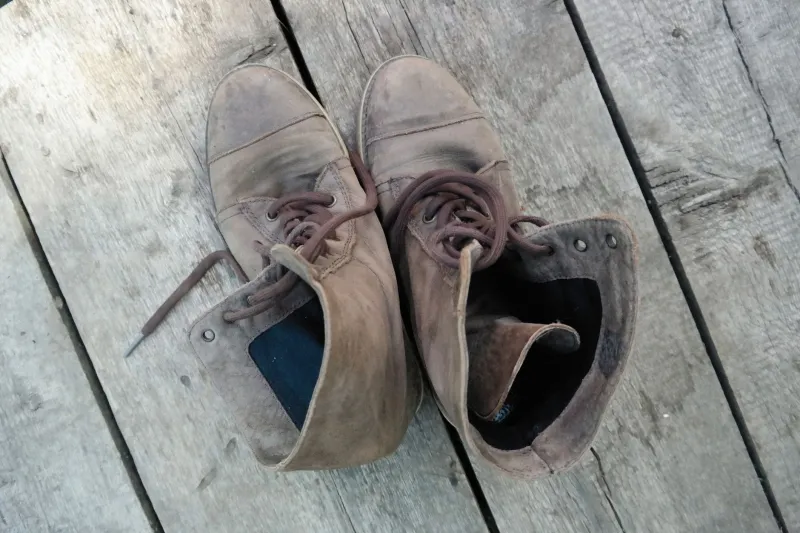
There is a particular pile of shoes behind most front doors in Britain: fourteen pairs, perhaps, of which three are worn regularly and two are kept solely for weddings. The rest occupy space and generate a low-level guilt that resurfaces each time the hall is cleaned.
Shoes are the most over-bought and least considered part of the working wardrobe. They are bought in a hurry, on a Saturday, with a vague idea of an outfit rather than a clear idea of a week. The three-pair foundation is an attempt to reverse that order of thinking.
Why three is a working number, not an austerity measure
A commute in the UK asks three distinct things of footwear. It asks for protection from weather and paving — wet mornings, gritted roads in January, the long walk from the station. It asks for something clean and unremarkable enough to sit under a desk for eight hours. And it asks, occasionally, for something that will carry you through a formal meeting, an interview or a wedding without embarrassment.
Three pairs, chosen well, cover those three requirements and remove the daily decision entirely. The point is not deprivation. The point is that each pair is worn hard, maintained properly, and replaced only when it has genuinely finished.
Pair one: the walking boot
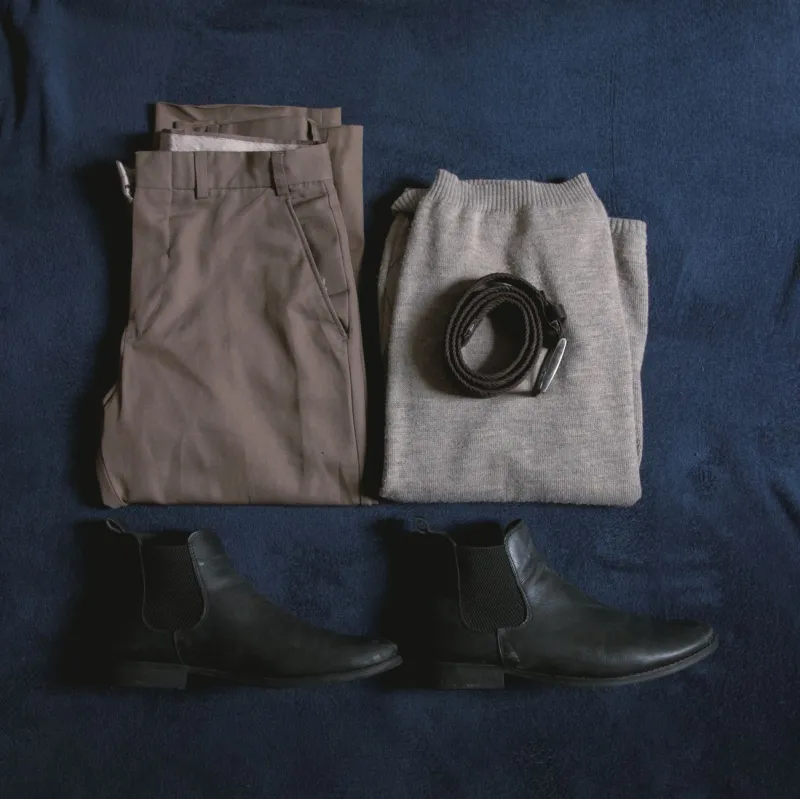
For the commute, the school run and the wet Tuesday. Leather or a heavy suede, ankle height, with a lugged rubber sole and a properly stitched construction. It should be water-resistant rather than waterproof — a boot that claims total waterproofing usually pays for it with breathability — and it should take a wax treatment once a month through the winter.
Break-in matters. A leather boot needs two or three weeks of short walks before it becomes the pair you reach for without thinking. Salt and grit from December pavements should be wiped off the same day; left until the weekend, it etches the leather permanently.
The test of a good boot is whether the sole can be replaced. A stitched sole can be resoled by a cobbler for a fraction of the purchase price; a glued one generally cannot.
Pair two: the clean everyday shoe
This is the pair that sits under the desk. A leather trainer with a plain sole, a derby, a loafer, a chunky-soled brogue — the exact style matters less than the finish and the fit. Dark brown or black leather, no visible branding, a shape that survives being worn with trousers four days out of five.
Suede is lovely and unreliable in a British autumn. If suede is the preference, it needs a protector spray before the first wear and a brush kept nearby. White soles yellow; a cream or gum sole ages more gracefully. Laces wear out before the shoe does, which is a cheap problem to have.
This is also the pair that will be worn most often, and therefore the pair where quality pays back fastest.
Pair three: the low formal option
A low block heel, a slim leather loafer or a clean ballet flat, depending on preference and the shape of the working week. It needs to work with tailoring, with a dress, and with a dark outfit at short notice. It should be comfortable for an hour of standing and a short walk to a station.
Buy this pair last, and buy it once. Formal shoes are worn perhaps a dozen times a year; they should look untouched for a decade, which means a classic shape, a leather upper and a resolable sole.
The comfort test, before money changes hands
Try shoes at the end of the day, when feet are at their largest. Wear the socks you would actually wear. Walk on a hard floor for at least twenty minutes, not the carpet of the shop. Then check three things: whether the heel slips more than a few millimetres, whether the toe box presses on the widest part of the foot, and whether the arch feels supported rather than merely padded.
Any pair that rubs in the shop will rub harder in the street. There is no breaking-in period that fixes a shoe of the wrong shape.
Repair potential, weighed before purchase
A good cobbler is a wardrobe's most useful contact. Heel tips, resoling, stretching a tight toe and re-stitching a seam can add years to a pair for twenty or thirty pounds. What cannot be repaired is corrected grain leather — the coated finish that cannot be fed or revived — and any sole moulded to the upper in a way that resists replacement. Look at the construction before the colour.
Cost per wear, honestly calculated
| Pair | Price | Wears a year | Years | Cost per wear | | Walking boot | £190 | 100 | 5 | 38p | | Everyday shoe | £140 | 150 | 3 | 31p | | Low formal | £160 | 12 | 10 | £1.33 |
The formal pair looks expensive per wear and costs the least in total across a decade. The everyday pair pays back fastest. The arithmetic is worth doing before a sale, because a £60 pair worn twenty times is a worse decision than a £190 pair worn five hundred.
On trainers, wellingtons and the rest
Some footwear sits outside the three. Wellington boots, running shoes and anything kept by the door for genuine mud are equipment rather than wardrobe, and should be counted as such — stored by the door, replaced when they fail, not curated. A summer sandal may join the three for a genuinely warm fortnight; a black-tie shoe only when a black-tie invitation exists.
When to add a fourth pair
Only when a repeated, documented need appears — a second everyday pair so that one can be resoled while the other is worn, for instance, which is the most common legitimate reason. Beyond that, three is enough. The hall stays clear, the decision is already made before coffee, and the money stays where it is.