A Short List and a Sharp Eye: Buying Secondhand Without Bringing Home Clutter
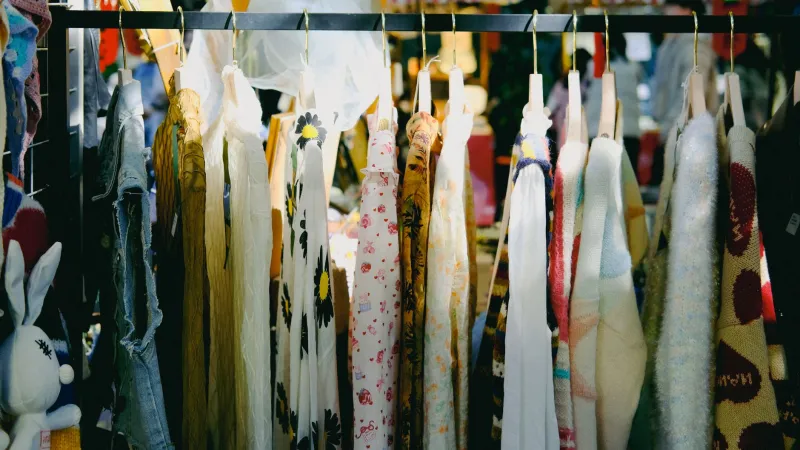
There is a particular kind of optimism that arrives on a Saturday morning outside a charity shop: the sense that somewhere on those rails is a coat you did not know you wanted, in your size, in good wool, for eleven pounds. Occasionally this happens. More often, the optimism produces a bag of things that fit approximately, suit loosely and join the pile of garments that are neither worn nor quite discarded.
Secondhand shopping is the most sustainable form of considered shopping available, and it is also the easiest to turn into clutter. The difference between the two outcomes is rarely luck. It is a short list and a sharper eye.
Why Secondhand Rewards a Narrow Brief
A new-clothes shop is curated for you. Someone has decided what the season looks like, arranged it by colour and size, and priced it accordingly. A charity shop does none of this. Its rails are a random sampling of a town's wardrobes, ordered by nothing more than the volunteers' patience, and its prices are low enough to disable judgement.
That randomness is an advantage only if you arrive already knowing what you are looking for. With three specific gaps in mind — a mid-weight navy knit, say, a pair of straight-leg trousers in a dark neutral, a lined wool jacket in your size — the same rail becomes a search rather than a browse. The eye stops scanning for possibility and starts scanning for a match.
Write the list before you leave the house, and keep it to three items. Anything beyond three is not a list; it is a wish.
Read the Label Before the Price
The most common secondhand mistake is falling for a garment at the point of touch. Wool feels wonderful on the rail. So does cashmere, and so does a soft viscose that will pill irrecoverably within a month.
The label settles it. Fibre content first: a high proportion of wool, cotton, linen or silk is generally worth your time, while a blend heavy in acrylic or polyester rarely behaves well after a few washes, however good it feels in the shop. Then the care instructions — a piece requiring specialist dry cleaning is a commitment, not a bargain. Then the origin and the construction details: a clean, well-finished seam allowance, a proper lining, real horn buttons and a spare button still attached all suggest a garment built to last.
Finally, look for the things photographs and summary descriptions never show. Underarm seams. Elbow patches worn thin. The seat of trousers. Cuffs that have been turned and re-turned. Hems let down and re-stitched, which often leaves a faint line. A repair you would happily make is fine; a repair you would postpone indefinitely is a reason to walk on.
What to Wear, and What to Bring
Charity shopping is physical work, and the fitting room is often a curtain and a mirror at an unhelpful angle. Wear something close-fitting and neutral, so you can try a jacket over it without guessing. Bring a cloth tape measure in a pocket if you are buying for fit rather than trying on.
Judge fit in a fixed order. Shoulders first — they cannot be altered affordably. Then armholes and sleeve length. Then the rise and the waistband, which can be taken in but rarely let out. Then length, which is the easiest thing to change. A garment that is right at the shoulders and slightly wrong everywhere else is a candidate. A garment that is wrong at the shoulders is not.
Allow for the alteration in your calculation. A ten-pound jacket that needs thirty pounds of tailoring is still reasonable; a ten-pound jacket that needs thirty pounds of tailoring and will not be worn is not.
What to Leave on the Rail
Restraint is easier when it is specific. Leave behind:
- Anything needing three fixes. One alteration is realistic. A missing button, a broken zip, a hem and a stain is a project, not a purchase.
- Duplicates. If you already own a black merino crew, a second black merino crew is not a find; it is storage.
- Occasion wear without an occasion. A heavily beaded dress at four pounds is not value if it hangs unworn for three years.
- Garments that need a specific underlayer you do not own. The top that only works with one particular bra will stay in the drawer.
- Anything bought because of the label alone. A designer piece in the wrong size remains the wrong size.
Making It a Habit Rather than a Hobby
The most useful structural change is frequency. A monthly visit with a written list behaves very differently from a weekly browse. Monthly gives stock time to turn over, keeps the list current, and removes the mild urgency that comes from being in a shop with an hour to spare.
Set a modest cash budget and take it in notes rather than relying on a card. Take a tote rather than accepting a bag. And apply the same rule you would apply to anything new: if it enters, something leaves. A one-in, one-out discipline is what keeps a secondhand habit from quietly inflating the wardrobe it was meant to refine.
There is also a quieter pleasure in buying this way that deserves acknowledgement. A charity-shop coat has usually already survived several years of real weather and real wear, which is a more honest test than any changing-room mirror. If it still looks well on the rail, it will very likely look well on you.
Buy less, choose carefully, and let the short list do the work. The rail is not a challenge to be conquered. It is simply a place where, once a month, the right thing occasionally appears.