A Second Fitting: The Small Tailoring Budget That Makes a Capsule Work
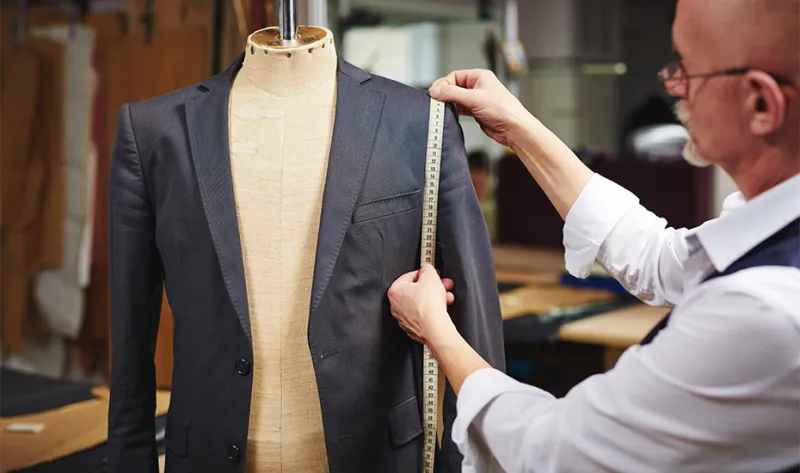
Photo: tailor pinning trouser hem in alterations studio, natural light, neutral clothing, via static.thehoneycombers.com
Most wardrobes are edited at the point of purchase. We compare fabrics, consider cost per wear and decide whether a coat or a trouser deserves the space. What is discussed far less often is the step immediately afterwards: the small, unglamorous adjustment that turns a nearly-right garment into one that disappears into daily use. In a capsule wardrobe, fit is not a luxury detail. It is the mechanism by which fewer clothes manage to work harder.
A jacket that pulls across the back, a trouser that breaks in the wrong place or a sleeve that stops short of the wrist will not improve with time. Nor will it become more appealing because it was expensive or because it looked convincing under shop lighting. The alteration appointment is therefore less a vanity project than a final quality check. It asks a simple question: is this garment prepared to meet the life it was bought for?
The fixes that usually justify the journey
Not every alteration is sensible. The best candidates are straightforward corrections to length and line, made on garments that are otherwise sound. Hems are the most common. Trouser hems typically cost £15 to £25 in regional UK alterations rooms and rather more in London or through a department store service. A skirt hem may sit in a similar range, while a lined dress or a coat hem can rise to £30 or £50 because the lining must be opened and rebalanced.
Sleeve length is the next useful correction. On an unlined shirt or blouse, shortening a sleeve may cost £20 to £30. On a jacket with working cuffs or a lining, the price climbs quickly, sometimes to £35 or £60, and the work is more visible if it is done badly. A waist adjustment on trousers or a skirt is often £20 to £40, depending on whether the waistband must be removed. Taking in a centre back seam on a dress may fall into the same bracket.
More complex work deserves more caution. Shoulder adjustments can cost £50 to £90 and alter the entire balance of a jacket. Resizing a garment by more than one size, remaking a collar or correcting a twisted leg is rarely a quiet fix. These are not automatic reasons to refuse, but they are reasons to ask whether the garment was ever the right starting point.
What a tailor needs from you
An alteration is a collaboration, and the appointment works best when it is treated as such. Take the shoes you expect to wear with the garment, particularly for trousers and skirts. A hem measured without them is only a guess. Wear the underlayers you would normally choose, especially beneath a jacket or coat, so the fit is judged in realistic conditions. If a garment has been bought online, bring the receipt and leave the tags attached until the work is agreed.
Useful questions are practical rather than deferential. Ask what exactly is included in the quoted price. Ask whether the original hem can be preserved, and whether the fabric has enough seam allowance to let out later. Ask how the tailor will handle pattern matching at a seam, lining, pockets or vents. Ask when the garment will be ready, and what happens if the result is not right. A good alterations room will answer without defensiveness. It will also tell you when a job is not worth doing.
The threshold between fixing and returning
The simplest rule is to judge the garment as a whole. An alteration is worth paying for when the correction is local, the fabric and construction are sound, and the finished item will fill a genuine gap in the wardrobe. A useful financial threshold is to keep the alteration under roughly 15 to 20 per cent of what you paid for the garment. That is not a universal law, but it prevents a modest purchase from becoming an expensive project.
Return the garment when the problems are plural. If the shoulders are wrong, the waist is wrong and the length is wrong, you are not buying clothes; you are commissioning them. Return it also when the required fix depends on fabric that cannot take it, when the seam allowance is too narrow, or when the tailor hesitates for reasons they can explain. A cheap secondhand find may still be worth altering, but the same logic applies: the total cost, in money and attention, must remain proportionate to how often the piece will be worn.
A small budget, deliberately spent
A calm wardrobe does not require a standing tailoring account. It requires a small reserve for the moments when a good garment needs a final adjustment. Some people keep a figure of £50 to £100 a year for this purpose; others simply set aside the cost of one hem and one waist adjustment. The amount matters less than the intention. It signals that buying is not the end of the process.
In practice, the alteration appointment is one of the quieter forms of wardrobe care. It does not refresh a look or answer a trend. It simply allows a garment to sit properly on the body and to be worn without constant negotiation. For a capsule wardrobe, that is not a minor gain. It is the difference between a rail of plausible clothes and a small collection that genuinely works.